


https://defenceweb.co.za/industry/industry-industry/defence-committee-lauds-denel-aeronautics-turnaround-but-warns-of-group-challenges/
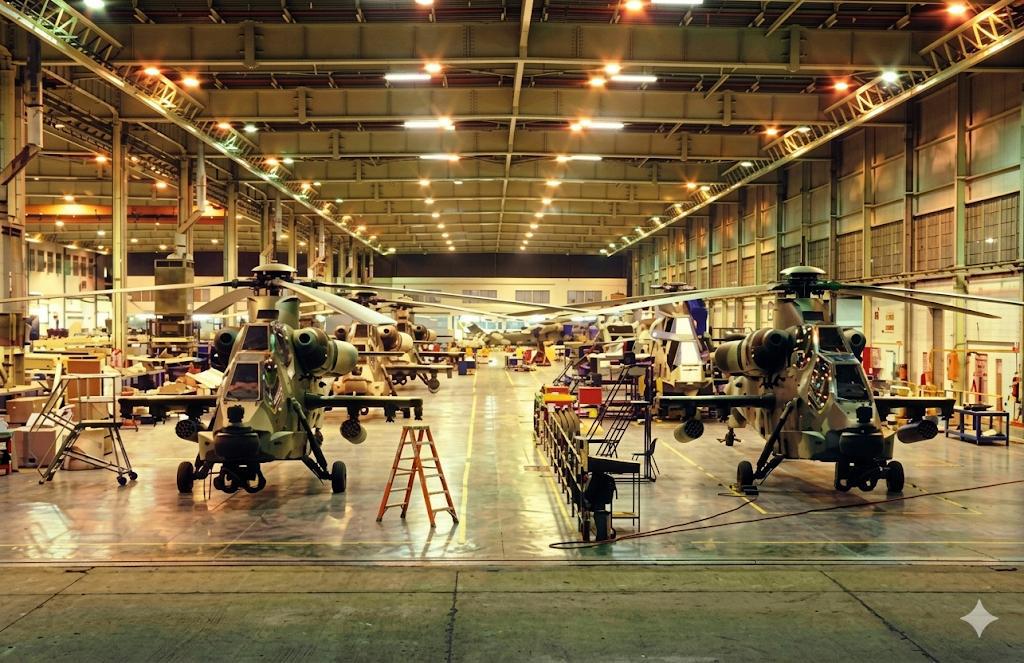
Parliament’s Joint Standing Committee on Defence (JSCD) and Portfolio Committee on Defence and Military Veterans (PCDMV) have welcome the successful turnaround at Denel Aeronautics, including the posting of a R178 million profit, which should help it better support the South African Air Force (SAAF).
The co-chairpersons of the Joint Standing Committee on Defence, Phiroane Phala, Dr Malusi Gigaba, and the chairperson of the Portfolio Committee on Defence and Military Veterans, Dakota Legoete, in a joint statement following a 28 April oversight visit to Denel Aeronautics, commended the division for its recent turnaround, including the removal of maintenance backlogs and the posting of a R178 million profit.
However, committee members raised concern about the financial instability of the broader Denel Group. Denel told the delegation that the wider Group continues to face severe liquidity constraints and remains dependent on government recapitalisation.
Committee members raised concerns about the SAAF’s limited aircraft availability and low flying hours. There were also concerns about the SAAF’s reported expenditure of around R2.4 billion on chartered aircraft over the past five years. They considered this a worrying indicator of operational gaps and reduced capacity. This trend, they argued, underscores the urgency of restoring Denel’s capacity and credibility, as well as ensuring that the SAAF is appropriately structured and funded.
In addition, the Members noted with deep concern the delay in the procurement and delivery of spares for aircraft refurbishment, maintenance and overhaul, which, in turn, delays the completion of projects and their availability to the SAAF. Members said these delays point to serious coordination and governance weaknesses among the stakeholders concerned, including the Department of Defence and Military Veterans, Armscor and Denel.
The delegation warned that Denel’s risks extended beyond finances. The continued loss of critical engineering skills, driven by uncompetitive salaries and international poaching, posed a serious threat to long-term sustainability. However, the delegation noted that Denel Aeronautics appeared to have mitigated this risk by attracting a significant number of engineers in recent years and has fulfilled all accreditation requirements for aircraft maintenance. Members also commended Denel Aeronautics for being the chosen service provider for various international aircraft manufacturers in Africa.
During a tour of the facilities, the delegation welcomed the recruitment of young engineers and artisans who were receiving their training as part of the National Skills Programme. Committee members applauded the entity for its commitment to youth and critical skills development but cautioned that without strong retention strategies, Denel Aeronautics’ talent pipeline could be weakened.
Phala said that Denel has only recently been transferred to the defence portfolio, and both committees are aware of the challenges facing the entity. Despite this, Denel Aeronautics remains a critical part of the defence system, as its work directly affects the SANDF’s operational readiness. The co-chairperson also called for steps to ensure that revenue generated by Denel Aeronautics is retained in the entity and protected from broader liquidity challenges facing the Denel Group.
The delegation noted that without decisive intervention, Denel’s sustainability and its ability to support national defence capabilities will remain at risk.
Future ambitions
In a presentation to the committees, Denel Aeronautics gave an outline of its past and present statuses and its future ambitions. It noted it is mainly dependent on South African National Defence Force (SANDF) contracts and legacy products and services support. It aims to diversify its product and services portfolio to 40% local and 60% export, with target markets being Africa, the Middle East, and South America.
Denel Aeronautics “has made significant operational progress over the past period, successfully recovering from prior backlogs and bringing performance back on track. Through focused execution and disciplined management, the division has effectively caught up on nearly two years’ worth of delayed targets, stabilising core operations and restoring reliability across key programmes,” the company said.
“This recovery has enabled consistent delivery against contractual obligations, strengthened customer confidence, and positioned the division on a more sustainable and predictable operational footing going forward.”
Revenue for Denel Aeronautics, the Denel Technical Academy and Overberg Test Range (OTR) for the year to date was up 18.7% to R881 million, with net profit of R178 million. R2.1 billion worth of future revenue is being pursued. A proposal has been submitted for Rooivalk Mk 1.1 phase 1 upgrades (worth R600 million), along with a proposal for new Rooivalk windshields (R30 million).
For the SAAF’s C-130BZ Hercules fleet, Denel has submitted a proposal for the major service of aircraft 401 (R85 million) and is awaiting feedback. Product system support (PSS) for five years has been obtained and is to be executed as of 1 April – this is worth R500 million. A request for quotation for a C-130BZ spares contract worth R300 million is awaited.
Denel Aeronautics is also pursuing foreign clients, and has submitted a quote to Botswana for the maintenance of a Botswana Defence Force C-130 worth R50 million. It has also indicated to Botswana it would cost R600 million to upgrade its Hercules fleet’s avionics.
With regard to existing SAAF maintenance contracts, Denel Aeronautics is busy with Rooivalk, Oryx, and C-130 maintenance. However, insufficient SAAF funding is making it difficult to procure spares for the Rooivalk and Oryx fleets, with the Rooivalk urgently needing an upgrade to address obsolescence and supportability, and the Oryx fleet needing engine overhauls.
To overhaul the engines, gearboxes, rotor heads and other main Oryx components of 15 aircraft, Denel estimates it will cost R1.3 billion over three years, or R3.1 billion for new/replacement components. To put this in context, the total SAAF Helicopter Capability budget for the current financial year is just R1.1 billion.
Partnerships
Denel Aeronautics is looking to establish numerous international partnerships in support of the SAAF, including with Embraer as the preferred technical partner in Africa. This would cover manufacturing, MRO support, supply chain and logistic support, apprenticeship and type training in the region; and being a proposed industrial offset partner for South Africa.
With Airbus Helicopters Denel Aeronautics would like to see a revived focus on Africa, including D-Level MRO for new H215 and H225 helicopters and legacy SA 330 (Puma) and AS332 (Super Puma) helicopters; apprentice training for the Airbus Moroccan MRO facility; apprenticeship and type training in the region; asset management and resale opportunities for African countries with immediate requirements; and flight simulation training, amongst others.
For Safran, Denel Aeronautics proposes collaborative engine MRO support, including market expansion into Safran’s global network; legacy platform support for Makila 1A1, 1K2 and Arrius 2K2 engines; increased SAAF engine MRO support and sub-component work.
Denel Aeronautics would also like to be the T56 and PT6 engine service provider together with the SAAF for Africa, increasing Denel and SAAF operational standards, working with Pratt & Whitney, Rolls Royce, and Lockheed Martin on MRO support and certification.
New opportunities
Opportunities are seen in new products, including a possible Rooivalk Mk 2 that could be sold on the international market. The state-owned company is also looking at space capabilities, including the completion of a locally designed, manufactured and launched satellite. It is also pursuing the upgrade of the Overberg Test Range for satellite launchers, and tracking and testing for national space initiatives. South African National Space Agency and Department of Science and Innovation funding will be used to ensure the Overberg Test Range is ready to launch a first satellite in 2028.
Two unmanned aerial vehicles (UAVs) are on the cards, including fixed and rotary wing platforms. The rotary wing aircraft would have a maximum takeoff weight of 600 kg and be able to carry 120 kg of payload. The Rotary Wing UAS (RW-UAS) has applications in law enforcement, public safety, border patrol, search and rescue, communications relay etc. The aircraft is at the concept development and testing phase.
The fixed wing aircraft (Denel FW-VTOL) would feature four rotors for vertical takeoff and landing and a pusher propeller for horizontal flight. The electric aircraft is envisaged to be able to fly for about 50 km and have an endurance of 45-60 minutes. Denel said it is designed to fill an ‘eye in the sky’ role by carrying cameras and other payloads up to 2 kg.
